Peer Tutoring · 1st & 2nd Year DVM

The curriculum is new. The material isn't.

Nobody has taken these courses in their new form — including us, and we'll say so plainly. But acid–base is still acid–base, the brachial plexus hasn't moved, and the students a few years ahead of you have not only learned this material, they've since used it on real patients.

Request a tutor

Two-minute form, matched within 24 hours. Matching is free — desmoVet takes nothing. You'll know your tutor's rate before you agree to anything.

Why This Exists

Two things happened at once. The curriculum was rebuilt, and peer tutoring was cut.

That combination matters more than either change alone. In a normal year, the informal support system carries a lot of the weight — the upper-year who hands you their study guide, the warning about which block breaks people, the sense of what's worth memorizing. A curriculum change wipes most of that out. Old exams don't map. Study guides go stale. Faculty are teaching these blocks for the first time too.

So this is the year with the least informal guidance available and no formal tutoring to replace it. That's the gap this fills — honestly, and without pretending to certainty nobody has yet.

Veterinary Students Helping Veterinary Students

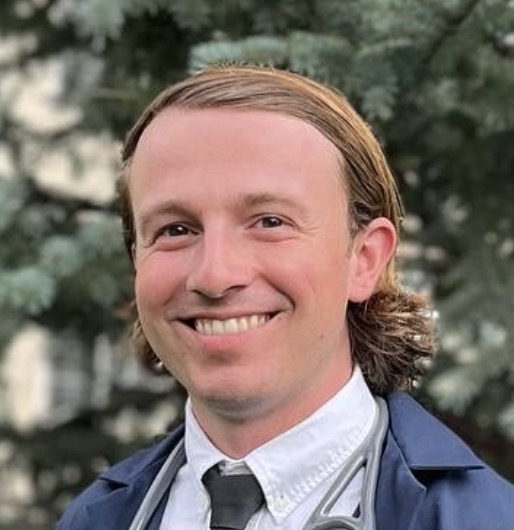
Kyle B.
Kyle B.
DVM Student · Founder, desmoVet

I sat in weekly group tutoring sessions as a first-year. They're a large part of why that year went as well as it did. Later I became the coordinator of that program, and got to watch the same thing happen for a lot of other students.

This year the program was cut. The reasoning was that students should get through it on their own — and some will. But starting veterinary school is one of the hardest transitions there is, and going through it during a full curriculum rebuild is harder still. That's not the year to remove the safety net.

So I'm keeping peer tutoring alive independently. Same idea that helped me, run properly, with tutors paid fairly for their time — because asking students to teach for free is how these programs quietly die.

What I'm not doing is taking a cut. desmoVet doesn't charge students, doesn't charge tutors, and never handles the money. This isn't a business built on the back of my own class — it's a replacement for something we lost, run by someone who used it and then ran it.

Veterinary students helping veterinary students. That's the whole thing.

How It Works

4 steps
1Tell us what's not clicking
A two-minute form. Name the topic, not the block — "acid–base compensation" gets you further than "the new integrated block."
2Get matched within 24 hours
Paired with a tutor who knows that subject well and has been examined on it. Wrong fit? We'll switch you — no charge, no awkwardness.
3Tutors set their own rate
We tell you what your tutor charges before you commit, and you pay them directly. desmoVet takes nothing and never handles the money.
4Wrong fit? We'll rematch you
Tutoring is personal and not every pairing works. Tell us and we'll look for someone else — no charge, no explanation needed.

What It Costs

matching is free

Why it works this way. Tutors are veterinary students whose time is worth paying for — asking them to teach for free is how these programmes quietly collapse, which is roughly what just happened to the one this replaces. But nothing about that requires desmoVet to take a cut. So it doesn't.

Rates vary by tutor, by subject, and by whether it's one-on-one or a small group. Group sessions cost each student considerably less, because the tutor's time is shared. When we match you, we tell you what your tutor charges — if it doesn't work for you, say so and we'll look for someone else, or tell you honestly if we can't.

The free tools on desmoVet — the Cardio Tutor, Neuro Tutor, the anesthesia calculator and EquiCalc — are free, always have been, and have nothing to do with any of this.

Vet School Is Expensive Enough

Veterinary students who graduated in 2025 carrying debt owed an average of $212,499, and 40% of the class owed more than $200,000. Nobody in this profession needs reminding that the cost is the problem. Adding another bill on top of it is not something we do lightly.

Tutors charge because their time is genuinely worth paying for, and unpaid peer tutoring collapses the moment people get busy — which is roughly what happened to the program this replaces. But we'd rather someone get help than get billed. So we work at accessibility deliberately, not as an afterthought:

We take nothing

Every dollar you pay goes to your tutor. There's no platform fee inflating the price, which is the single biggest thing keeping it lower than a commercial service.

The form asks about cost, privately

One question on the intake form asks whether cost affects who we match you with, including a "free or heavily reduced only" option. It's easier to tick a box than to tell a classmate you can't afford them.

Some tutors offer free slots

We ask every tutor whether they'll take reduced or no-cost students, and we track who says yes. If cost is your constraint, those are the people we send you to first.

Groups cost a fraction

Small group sessions split one tutor's time across several students, so each person pays far less. Bring classmates who are stuck on the same thing and it gets cheaper for everyone.

If money is what's stopping you, just say so. Email admin@desmovet.com or tick the box on the form. You'll never be asked for documentation, never asked to justify it, and it will never be shared with anyone beyond what's needed to find you the right tutor.

We can't promise a free match every time — that depends on which tutors have capacity. We can promise we'll try, and that nobody will make it awkward.

Subjects

1st & 2nd year

Because the curriculum has been restructured, these are the underlying subject areas rather than course codes — tell us the topic and we'll match you regardless of which block it now lives in. Don't see yours? Ask anyway; we'll tell you honestly whether we can help.

Foundational
Anatomy Physiology Biochemistry Histology Immunology Microbiology
Clinical & Applied
Pharmacology Anesthesia Clinical Sciences Large Animal Medicine Clinical Skills

Where the Line Is

⚠️
Tutors help you understand material. They never produce work you turn in.

No help with graded assignments. No discussion of exam content. No sharing of lecture slides, recordings, or question banks. If you're stuck on a graded problem, your tutor builds a similar one and works through that with you — you learn the method and complete your own assignment.

This service is independent and is not affiliated with or endorsed by any veterinary college. Your institution's honor code applies to you in full. Read the full policy before your first session — it takes three minutes and it protects you.

Questions

The curriculum just changed. Has my tutor actually taken my course?

No — and neither has anyone else. We'd rather say that up front than have you discover it in session one.

Here's what that does and doesn't change. It does mean no one can tell you how this specific block is assessed, what the exam format will be, or which lecturer emphasises what. Anyone claiming otherwise this year is guessing.

It doesn't change the material. Renal physiology is renal physiology whether it arrives in week 6 or week 20, and the places people get stuck — countercurrent multiplication, acid–base compensation, autonomic pharmacology — are remarkably consistent across curricula and across decades. Your tutor has learned this content, been examined on it, and in most cases has since applied it to actual patients. That last part is what a textbook can't give you.

There's also an upside worth naming: because we work with students across both years and every subject, we see the pattern of where the new curriculum is actually causing trouble faster than any individual student can. That gets shared back.

Is this allowed?

Yes. Tutoring is a normal part of academic life, and this service is independent of any school — no school space, materials, or branding is used. What isn't allowed is help with graded work or exam content, and tutors are contractually required to refuse it. If you're ever unsure about a specific request, ask before your session rather than after.

Who are the tutors?

Veterinary students in the years ahead of you who did well in that subject. For the clinical material — pharmacology, anesthesia, large animal medicine — tutors are typically third- and fourth-years who have since used it in clinics, which changes how well someone can explain why any of it matters.

Every tutor completes a teaching assessment before being accepted. Knowing the material and being able to teach it are different skills, and we screen for the second one. Students rate every session, and tutors who fall below standard don't stay.

Will anyone find out I'm using this?

Not from us. We don't discuss your performance or your use of this service with classmates, faculty, or administrators, and tutors sign a confidentiality obligation covering the same. Asking for help early is what strong students do.

What if I don't click with my tutor?

Tell us and we'll look for someone else. Tutoring is personal and not every pairing works — it's not awkward and you don't need to explain. Since desmoVet doesn't handle payment, anything already agreed between you and that tutor stays between you; refunds and cancellations are their policy, not ours.

What does it cost?

desmoVet charges nothing. Matching is free and there's no commission — your tutor keeps everything you pay them.

Each tutor sets their own rate, so it varies by person, subject, and format. We'll tell you what your tutor charges when we introduce you, before you commit to anything. If it doesn't work for you, say so and we'll look for someone else.

Group sessions cost each student considerably less, since the tutor's time is shared across several people. If you have classmates stuck on the same thing, say so on the form — it's the cheapest way to do this.

How do group sessions work?

A small group works through one topic with one tutor, and the cost per student is much lower than one-on-one. You can bring your own study group or we'll try to place you with others working on the same material.

Size, rate, and how payment is split are set by the tutor — we'll tell you before you commit. Most people should start here: it's cheaper, and the questions other people ask are usually the ones you didn't know to ask.

Can you help me pass?

We can help you understand the material faster and study more effectively. Nobody honest will promise you a grade — the exam is still yours to write, and anyone guaranteeing an outcome is selling you something.

How far ahead should I book?

Sooner than feels necessary. Demand spikes in the two weeks before every major exam, and that's exactly when availability disappears. One session in week three beats three sessions the night before.

How is this different from the Cardio and Neuro Tutors?

Those are free interactive study tools you work through on your own — they're on the Tools page and always will be free. This page is tutoring with an actual person. They're separate things: the tools cost nothing to use and aren't funded by tutoring in any way.

Is this a business?

No. desmoVet takes no commission and no fee, from students or tutors, and never handles the money — you pay your tutor directly. What desmoVet does is find you a tutor, check they can actually teach, and set the standards they agree to work to.

Tutors charge because their time is worth paying for. Unpaid peer tutoring collapses the moment people get busy, which is roughly what happened to the program this replaces. But nothing about that requires desmoVet to take a cut, so it doesn't.

I'm an upper-year student. Can I tutor?

Probably — we're recruiting. You set your own rate and keep all of it, you set your own availability, and there's no minimum commitment. We handle finding you students and matching them to what you're good at; you and the student sort out times and payment between yourselves. Email admin@desmovet.com.
Tell Us What You're Stuck On

Two minutes to fill in, matched within 24 hours. Free to use — you'll know your tutor's rate before you commit to anything.

Request a tutor